For most of us, the shape of a day looks after itself. We glance at a phone, half-remember a plan, and let routine carry us from breakfast to bed. But if you are autistic, or you have a learning disability, the day can arrive as a series of unanswered questions. What happens next? How long will it last? Who is coming today, and when? Uncertainty like that is exhausting, and for many people it turns into anxiety long before it turns into anything else.
Traditionally, the answer has been another person: a family member who narrates the day, a support worker who keeps things on track. That support is precious, and nothing replaces it. But there is now a well-established family of tools designed to hand some of that structure back to the person themselves. It is called cognitive support technology, and it is one of the most hopeful, and least understood, corners of UK care.
You will hear several official terms used around this field, so here they are.
Assistive technology (or “ATech”) is the umbrella: the UK government defines it as any product or service that helps disabled people do things they would otherwise find difficult, and take part in a world not always designed around them (GOV.UK).
Technology enabled care (TEC) is the NHS and social-care wing of that: technology that helps people stay independent and connected to care, from personal alarms through to video support (NHS England).
Cognitive support technology is the part of this world that supports thinking skills: memory, time, planning, sequencing and communication. Where a pendant alarm waits for something to go wrong, cognitive support tools help the day go well in the first place.
What it looks like in everyday life
Four examples show the range:

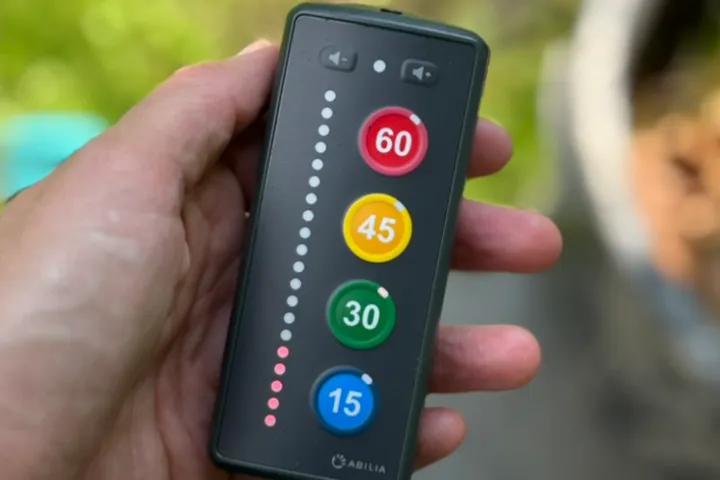
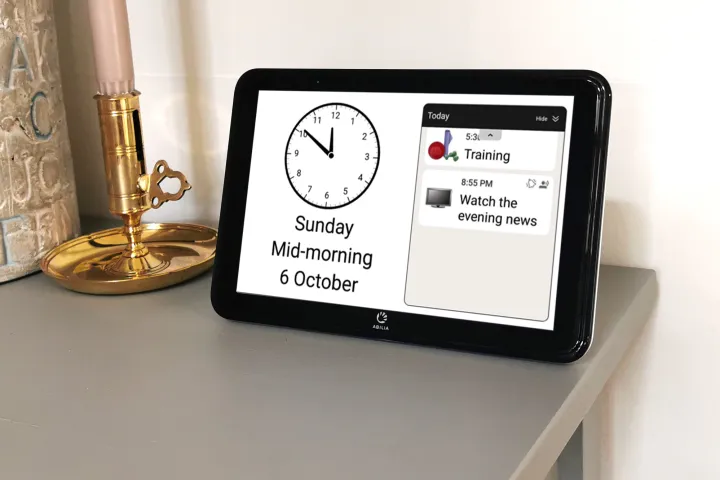
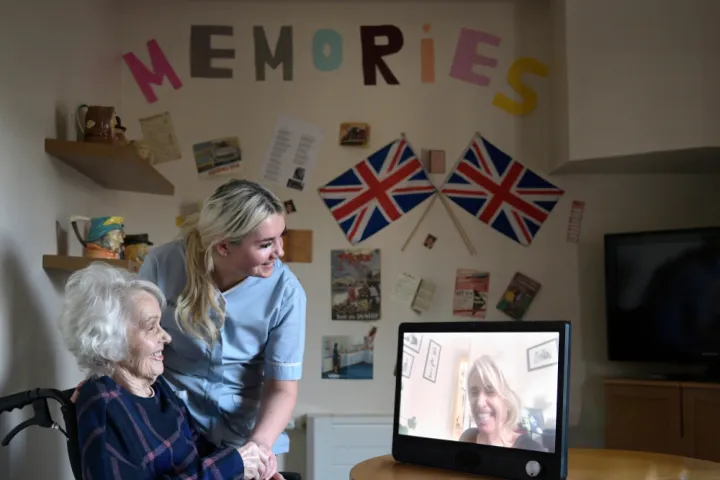
Does it actually help?
A fair question deserves a careful answer. Research into care technology as a whole is still catching up with practice; a 2026 UK evidence review found the formal, peer-reviewed evidence base for technology enabled social care to be limited, with much of what we know coming from smaller studies and pilots (University of Plymouth / Cornwall Council review).
Cognitive support specifically, though, has a longer research story than most of the field, much of it from occupational therapy. Studies indicate that time aids can support independence and autonomy in adults with developmental disabilities (Arvidsson & Jonsson, 2006), and people using electronic planning devices tell researchers they experience greater participation in everyday life (Wennberg & Kjellberg, 2010; Adolfsson et al., 2015). Users and families consistently describe lower stress and more predictable days. The measured way to say it is this: the evidence indicates real benefit, the lived experience is strongly positive, and the field still needs more large-scale research, which credible suppliers actively support.
One practical marker of quality: look for products that are certified as medical devices under the EU/UK medical device rules (MDR) and that publish the research behind them. Certification is not a badge for its own sake; it means the claims made about a product have to be backed by evidence.
How do people get it in the UK?
Most cognitive support technology reaches people through an assessment, usually by an occupational therapist, who matches tools to the person’s goals, environment and preferences. Local authority assistive-technology or TEC teams can assess and provide equipment as part of a care package; the Care Act 2014 places a duty on councils to promote independence and meet assessed needs, and technology is increasingly part of how they do that. Families and individuals can also use personal budgets and direct payments, or buy directly.
Some councils now make this easier to explore in person: Dorset Council's TEC Lounge at County Hall in Dorchester, for example, showcases technology in a relaxed environment, with impartial support and live demonstrations so people can try before they choose. If you or someone you support has a care review coming up, it is entirely reasonable to ask: could cognitive support technology help here, and can we trial it?
Why this matters now
An estimated 1.3 million people in England have a learning disability, and around a million people in the UK are autistic (NHS England). Social care is short of staff, and national policy, through the 10 Year Health Plan, is pushing care towards the community, towards prevention and towards digital. In that world, tools that quietly build independence, participation and inclusion are not a luxury. They are part of how good support will be delivered.
Technology will never replace the people who care. At its best, it extends what they make possible: a calmer morning, a more confident week, a life with more of its decisions in the hands of the person living it. That is worth understanding, and it is worth asking for.
Sources & further reading
GOV.UK, Using assistive and accessible technology: gov.uk/…/using-assistive-and-accessible-technology-atech
NHS England, Technology Enabled Care Services framework: england.nhs.uk/…/TECS_FinalDraft_0901.pdf
NHS England, Learning Disability & Autism Programme update: england.nhs.uk/long-read/update-on-learning-disability-and-autism-programme
University of Plymouth / Cornwall Council, Evidence review of Technology Enabled Social Care (2026). Academic studies: Arvidsson & Jonsson (2006), Occupational Therapy International; Wennberg & Kjellberg (2010), Occupational Therapy International; Adolfsson et al. (2015), NeuroRehabilitation.