The first week of a new academic year is short, loud and full of change. New timetable, new room, new adults, new expectations. Most students find it tiring and then settle.
For a student with autism or a learning disability, that first week can be something else entirely. Not a period of adjustment, but five days of not knowing.
What week one feels like without support in place
Start with the not knowing.
A person arrives on Monday without a reliable sense of what is coming next. They may not know how long a lesson lasts, or what the difference is between ten minutes and an hour. They may not know which adult will collect them, or what happens if the plan changes at eleven o'clock, because nobody has been able to tell them in a form they can hold onto.
Verbal instructions given once in a busy corridor do not stay. A timetable printed in a planner does not help if the difficulty is reading it under pressure. So the student spends the week checking. Asking. Watching adults for clues. Bracing for the next transition without knowing when it is coming.
That is cognitively expensive. It runs all day and it does not switch off at home time. By Friday the student is exhausted, and the actual learning has barely started. For some young people, the following Monday is when attendance starts to slip.
What it looks like in the classroom
None of that stays private. It shows up in the room.
It shows up as a student who cannot settle at the start of a lesson. As the same question asked repeatedly, because the answer does not stick without something to check it against. As distress at transitions, particularly unplanned ones. As withdrawal, or refusal at the door, or leaving the room.
Other students notice. The rhythm of the lesson gets interrupted. And because week one is when routines are supposed to be established, disruption in the first week tends to set the pattern for the term rather than being absorbed and forgotten.
What it costs staff
Teachers and support staff absorb the gap. That is what happens when a young person has no independent way of knowing what their day will be like. An adult has to be that source of information, over and over.
The first week goes on prompting, reassuring, repeating and de-escalating. Support hours commissioned to enable access to learning are spent holding the day together instead. The same conversation happens ten times before lunch. Handover between staff is verbal and inconsistent, so a student gets slightly different information depending on who they ask, which makes the uncertainty worse rather than better.
Everyone is working hard. Nobody has capacity to spare. And the effort is going into managing a problem rather than removing it.
What changes when the day is visible
Cognitive support technology is designed to do one thing well. It makes the day visible to the person living it.
That is a deliberately modest description. It is not designed to replace the adults around a young person, nor does it remove the need for skilled support. What it does is give the student their own reliable way of knowing what is happening now, what comes next, and how long it lasts. The information stops being something they have to request from an adult and becomes something they can check for themselves.
That shift matters more than it sounds. Asking an adult puts the young person in a position of dependence and puts a demand on staff time. Checking a screen does neither.
What this looks like in practice
The examples are usually simple.
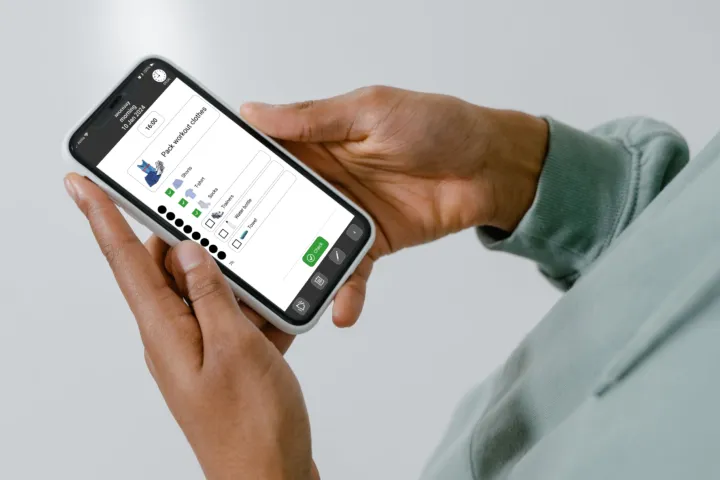
Calendar
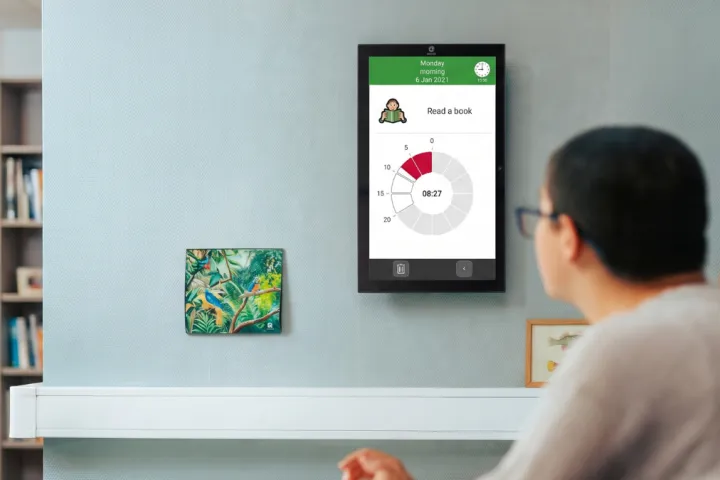
Timer
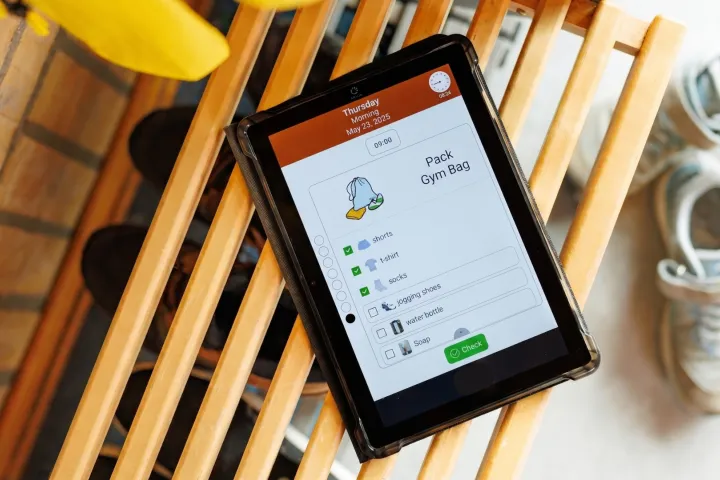
Checklist
The same schedule available in more than one place, so a young person at school and the people supporting them at home are working from one plan rather than three versions of it. Changes made remotely, so when the plan does shift, the student sees it in advance rather than meeting it cold.
Evidence from care settings points the same way. An independent investigation of MEMOplanner from a care provider perspective reported that having a schedule available reduced the need for staff prompting and reminders, and that staff described a calmer atmosphere and fewer misunderstandings as a result. That evidence comes from adult care services rather than schools, so it should be read as directional rather than transferable, but the mechanism is the same one. Predictability reduces the load on everybody.
Why this belongs in planning, not in crisis response
Most of the time this technology arrives after something has gone wrong. After a placement is at risk, after attendance has dropped, after a young person has had a term that could have gone differently.
It works better as part of planning. Transition between primary and secondary. Support plans and IEPs. Occupational therapy assessment, where a trial of a digital tool sits alongside everything else being considered. Planning for the move into further education, work or supported living, where the same underlying need continues long after school ends.
The question worth asking in September is not whether a young person coped with week one. It is whether they had any independent way of knowing what week one contained.
Talk to us
If you are supporting a young person who has had a difficult first week, we would like to hear about it.
We work alongside occupational therapists, local authorities, education teams and care providers to understand what an individual actually needs, and whether cognitive support technology has a useful part to play. Sometimes it does not. When it does, the aim is always the same, which is to help someone take part in their own environment and their own community with less reliance on somebody else holding the information for them.
Get in touch with the Abilia team to talk it through.